

Content:
I. What Is Masterbatch? A Deep Understanding of Its Core Value
II. In-Depth Comparison of the Three Major Coloring Schemes
2.1The Gold Standard of Industrial Production: Masterbatch
2.2Traditional Coloring Methods: Advantages and Disadvantages of Pigment
2.3Advanced Options for Precision Machining: Liquid MasterbatchIII. Standard Master Batches: The Essential Foundation of Plastics Processing
3.1Black Masterbatch
3.2White MasterbatchIV. Functional Master batches: Infusing Your Products with "Superpowers"V. Material Selection Guidelines for Different ResinsVI. Summary: Shift from "Buying Cheap" To "Buying Efficiency "VII. FAQs
7.1Q1. What is the recommended addition ratio for Masterbatch?
7.2Q2. Why do my injection molded parts have uneven color dispersion (color spots)?
7.3Q3. How should color oils be stored to maintain optimal performance?
7.4Q4. What are the most influential factors for the quality of a color masterbatch?
7.5Q5. How do you ensure the accuracy of customized colors?
7.6Q6. What is BOPE Masterbatch?
I. What Is Masterbatch? A Deep Understanding of Its Core Value
What is masterbatch? Masterbatch can be defined as a concentrated form that is created by uniformly loading an excessive amount of pigment into resin to give plastics color. It can range from solid to liquid form. During its production, the pigments undergo a rigorous process of dispersion that makes them highly stable when processed.As far as a master batch is concerned, coloring is only the beginning; in fact, it is more of a carrier that contributes additional functionality, such as antistatic, UV, or fire resistance.
II. In-Depth Comparison of the Three Major Coloring Schemes
To help you quickly get to know the information, we have compiled the following table, comparing and summarizing the performance of three common colour master batches: Masterbatch, Pigment, and Liquid Masterbatch in practical applications:
Want to know more? Let me explain in detail.
The Gold Standard of Industrial Production: Masterbatch
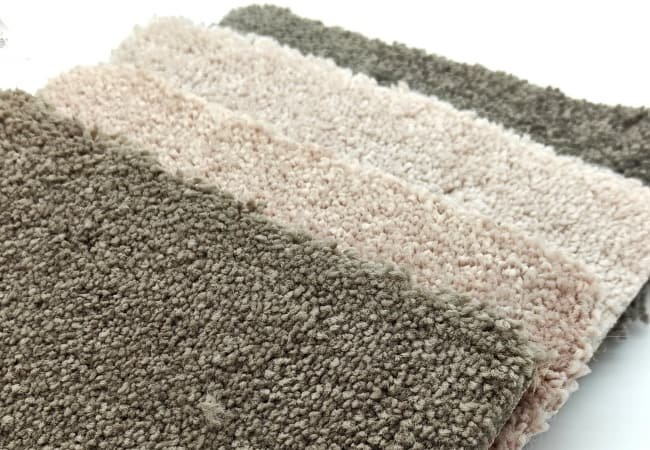
If you were seeking a balance between cost, efficiency, and quality, traditional solid colour masterbatch would no doubt be your first choice. Composed of granules, it pre-disperses high concentrations of pigments or additives into a carrier resin.
Compared to other solutions, plastic masterbatches' biggest advantage lies in their standardization.
First, it has excellent compatibility and dispersibility: in the masterbatch manufacturing process, the pigments have undergone sufficient wetting and high shear treatment, achieving a micron-level distribution, which can effectively avoid color differences or color spots in the finished product.
Secondly, its multi-functional integration offers excellent convenience: you can request the addition of additive masterbatch to your formulation, which means you don't need to buy antistatic agents or antioxidants separately,which save your time and money.
Finally, it features automated and clean production: the granular masterbatch plastic is easily fed automatically by gravity or a suction machine, eliminating the problem of dust flying in the workshop.
Traditional Coloring Methods: Advantages and Disadvantages of Pigment
Although pigment has the lowest unit price during the initial purchase, it can be a double-edged sword. Before granulation, pigment is an extremely small powder, which places stringent requirements on the processing environment.
The pigment offers extreme cost reduction for raw materials, for some low-value-added bulk plastic products, using pigment powder can indeed save carrier costs.
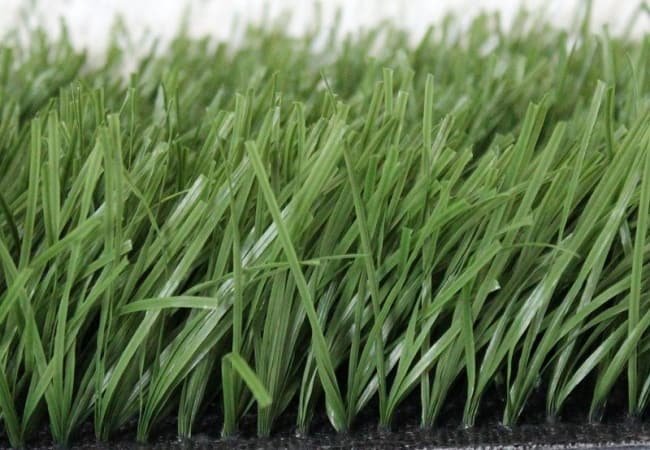
However, this also brings the risk of defective products, the pigment powder relies entirely on the screw shear force of the injection molding machine or extruder to disperse. If the mixing is uneven, severe streaks will appear on the product surface.
Also, the flying pigment powder can contaminate filter elements, motors, and even adjacent production lines. The labor and time to clean a device influenced by it often cost more than you have saved by using masterbatch. This is what you won’t want to see.
Advanced Options for Precision Machining: Liquid Masterbatch
As a solution that has emerged in the fields of high-end packaging and medical devices in recent years, liquid masterbatch offers an alternative approach: it suspends pigments in a liquid carrier and injects them directly into the cartridge via a precision pump.
Liquid masterbatch has an extremely high tinting strength: the pigment loading of liquid masterbatch is sometimes higher than that of solid masterbatch, and it has excellent fluidity, making it very suitable for manufacturing thin-walled parts with extremely high transparency requirements.
Furthermore, it can achieve precise control even though you may only add a little of it to your products. When your addition ratio is less than 1%, the solid particles may be unevenly distributed, while Liquid Masterbatch can achieve micro-droplet-level control through a precision metering pump.
While it offers excellent color performance, its storage requires a sealed environment to prevent sedimentation. And typical masterbatches for injection molding production lines need to build an additional liquid pumping system for it. Therefore, most manufacturers still prefer to use solid masterbatches, which offer stable performance and are easy to store.
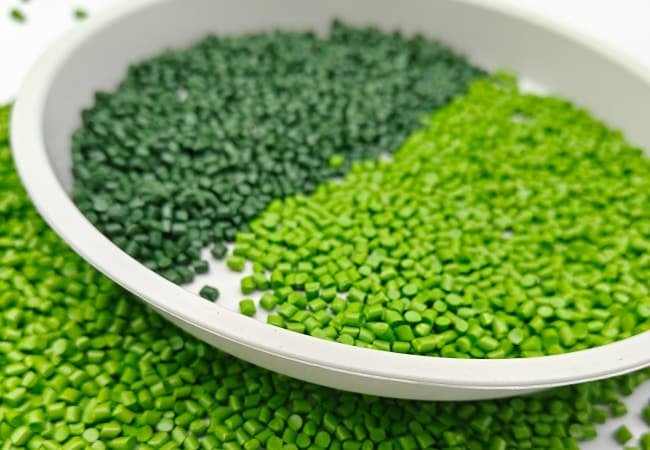
Standard Master Batches: The Essential Foundation of Plastics Processing
Although their names are related to color, black or white master batches are completely different from color master batches used to add bright colors to products, such as blue masterbatches. They are called standard master batches, are mainly used for covering and protection.
Black Masterbatch
As an industrial "silencer" who cover spots, black masterbatch is widely used in pipes, geomembranes, and automotive parts.
High-end carbon black masterbatch not only provides a deep black to cover imperfections, but its carbon black is also a natural UV absorber. Top black masterbatch suppliers select carbon black with different particle sizes during production to meet various needs, from high blackness to UV resistance.
White Masterbatch
In the packaging industry, the performance of white masterbatch directly determines the product's quality.
Good white masterbatch uses high-quality TiO2 master batch, making translucent or yellowish plastic completely opaque.
This allows you to print text on packaging bags or make plastic bottles look more premium.In addition, white reflects light and reduces heat absorption, which is crucial in agricultural films or white roofing materials.
Functional Master batches: Infusing Your Products with "Superpowers"
In addition to basic standard master batches, additive masterbatches are your secret weapon to increase the added value of your products.
For example, antiviral and antimicrobial masterbatches, which encapsulate active ingredients (metal ions, photocatalysts, etc.) within polymer masterbatches, achieve extremely high antibacterial rates without altering the plastic's transparency. With increasing global emphasis on health, demand for these masterbatches has surged in the medical device and home appliance industries.
In addition to these, there are many other types of functional master batches: conductive masterbatch, UV masterbatch, and antiblock masterbatch, etc.
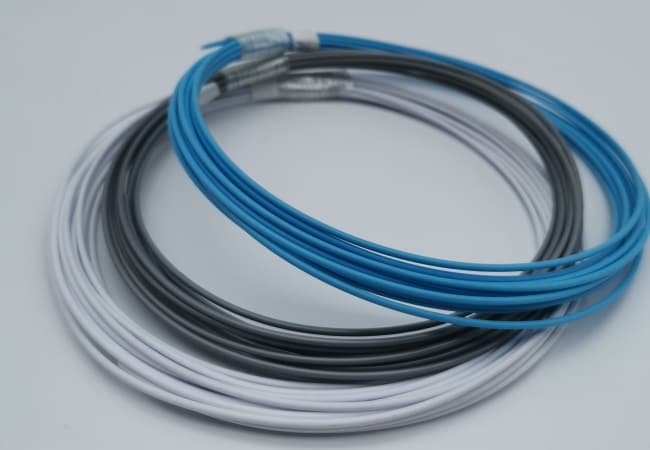
Material Selection Guidelines for Different Resins
Different plastic materials have vastly different requirements for masterbatch.As a clever buyer, informing your color masterbatch supplier of your substrate type can be more than helpful.
Summary: Shift from "Buying Cheap" To "Buying Efficiency "
In the plastics processing market of the year 2026, it will no longer be feasible to just go after the cheapest sources of raw material processing.
The best way of processing is to decrease the rate of scraps, minimize time spent in cleanup, and incorporate more functionality (like antistatic or conductive properties) into your product with high-quality masterbatches.If you need information on the technical details of color masterbatches or need to take part in a masterbatches compounding course to enhance the capabilities of your staff, we are there to help.
FAQs
Q1. What is the recommended addition ratio for Masterbatch?
Type your paragraph hereThere is no fixed answer to this question. The specific ratio depends on the thickness of your product and the concentration of the pigment.
Generally, the recommended amount of color masterbatch is between 1% and 5%. For high-concentration black masterbatch, even 1% may be sufficient to achieve perfect coverage.
This is a titleWhy do my injection molded parts have uneven color dispersion (color spots)?
Many manufacturers face the same problem as you, and you don’t have to worry about it. This problem is usually caused because the masterbatch carrier is incompatible with your substrate, or there is a defect in the masterbatch manufacturing process itself.
We recommend checking whether you have selected the correct masterbatch for your production line.
Q3. How should color oils be stored to maintain optimal performance?
Liquid masterbatch must be stored in a cool, dry place and sealed.If not stored properly, liquid masterbatch will deteriorate and become unusable.
Before use, you should stir the color oil using professional equipment if you can to prevent pigment sedimentation and uneven coloring.
Q4. What are the most influential factors for the quality of a color masterbatch?
The secret to producing top-class color masterbatch is embedded in whether the pigment can be dispersed, as well as its compatibility with the carrier resin.
An efficient shearing mixing process can result in the refinement of the pigment down to the micrometer level, which will, in turn, avoid color spots in the final product.
Moreover, the selective requirement for material and a standard process in production play a significant part in the stability of quality in mass production.
Q5. How do you ensure the accuracy of customized colors?
Type your paragraph hereFinding the right professional manufacturer is the key.
Professional manufacturers will use precision colorimeters to compare samples or color codes and conduct simulated prototyping.
Since the base color of the raw materials and the processing technology directly affect the final color, you should provide the actual substrate used in production during the sampling stage, especially modified materials and ABS, which have relatively dark base colors.
Q6. What is BOPE Masterbatch?
Bope masterbatch is a masterbatch specifically designed for biaxially oriented polyethylene (BEE) films.
It requires maintaining color uniformity and film toughness even at extremely high stretch ratios. Due to the thinness of the film, the masterbatch dispersion requirements are extremely high.