

You are trying to find an answer to this question, probably for one of the following reasons. You have seen the quote "color masterbatch, 2usd/kg" and you do not know where the money will go. You were told by your supplier "just add 2%" and now you wonder why 2% and not 20%. Or you want to do the color matching yourself but do not know from where to start.
This article discusses the color masterbatch starting from the molecular structure to its production process. It talks about its composition, functioning, manufacturing, types, comparison of color masterbatch, dry color, and liquid color, selection process of the color masterbatch, application of the color masterbatch, and 8 common misconceptions that 90% of people have about it. Read on to know more about everything.
1. What Is Color Masterbatch?
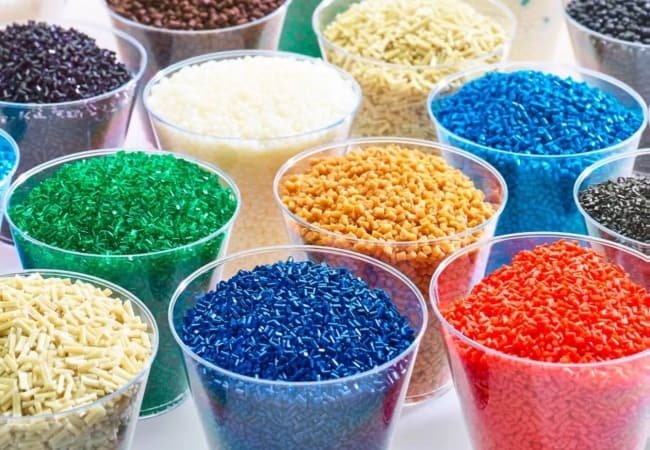
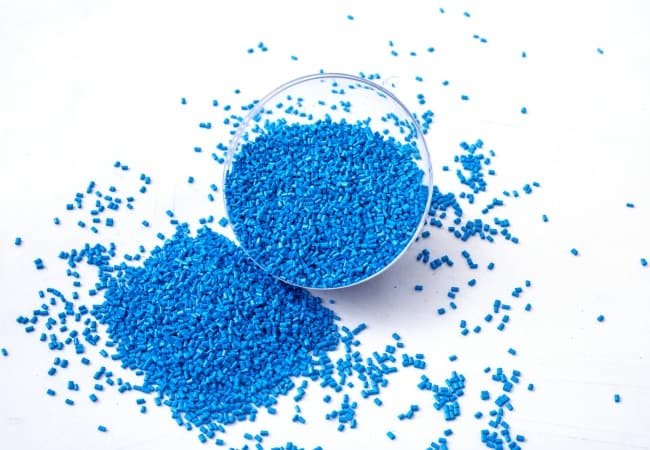
Color masterbatch is the concentrated colorant achieved by the dispersion of a large amount of pigment in a carrier resin and its subsequent pelletization. Upon application, you just need to mix it with the base in the ratio of 1%-5%.
A simple statement for memorization: color masterbatch is "the concentrated juice for plastics". Imagine that you won't be able to pour an entire bottle of food coloring into a bucket of water. Instead, you will need to pour a small amount of concentrated liquid.
Three main ideas are embedded into this analogy, and this is what you need to know about color masterbatch:
· Concentration: The percentage of pigmentation is usually between 20%-70%, which means that the dosage is very low.
· Pre-dispersion: The pigment is “pre-dispersed and encapsulated” before being dispatched from the factory. The client no longer has to worry about agglomerations.
· Standardization: Color, consistency, and moisture of each individual batch are kept within a tight range, ensuring repeatable results.There is, however, one prerequisite: All of the above applies exclusively to properly manufactured masterbatches. Poorly manufactured masterbatches are concentrated, yet inconsistent and standardized, yet inconsistent. This is just a costly bag of plastic pellets.
2. What Is Color Masterbatch Made Of? (Composition)
Each masterbatch pellet is effectively a composite of four components.
2.1 Pigment / Dye — decides the color
The first is the core, ranging from 20% to 70% by weight. The following three are:
· Inorganic Pigment: Titanium dioxide, iron oxide, phthalocyanine pigments. Excellent weathering and heat stability, poor tinting strength. Ideal for exterior applications and engineering plastics.
· Organic Pigment: Azo, phthalocyanine, anthraquinone pigments. High tinting strength and vivid colors, however, with variable weather and heat resistance. The grade should be checked before purchase.
· Effect Pigment: Pearlescent, metallic, fluorescent. These pigments create their colors by using optical effects rather than absorption.
The industry uses Color Index number (C.I.) to designate each specific pigment. For instance, the phthalocyanine green is C.I. Pigment Green 7. The pigment should be bought by the C.I. number; it is much more reliable than the trade name as it may vary in structure among different manufacturers.
2.2 Carrier — decides compatibility
The carrier is the resin layer the pigment is "loaded" into. It comprises 30% to 80% of the weight and remains in your end product.
Therefore, the first principle consists of three words only: "like dissolves like." The carrier of the PE must be used for PE products; PP carrier for PP, ABS or SAN carrier for ABS; and PC carrier for PC products. Inappropriate choice of the carrier will ensure the correct color of the material but the product will become brittle and show delamination and interface problems.
2.3 Dispersant — decides uniformity
The usual selection includes polyethylene (PE) waxes, metal soaps, and low molecular weight polyolefin. This additive helps in wetting and coating the surfaces of pigment particles to prevent agglomeration.
In one sentence: In the absence of a dispersant, the pigment will agglomerate similar to sugar absorbing moisture.
2.4 Additives — decide the added value
Today's masterbatch may not just be used for coloring. It also includes:
· UV Stabilizer / HALS - for longevity
· Antioxidant - to prevent degradation during processing
· Anti-block and Slip - for films
· Flame retardant and antistatic - functional grades
· Antimicrobial, matte, nucleation additives
Technically, these materials should be referred to as Additive Masterbatch. However, in the market, they are usually sold as color masterbatch.
3. How Does It Work?
This is the most important section of the article. Usually, articles tend to become ambiguous at this juncture. But the query "why does 2% color a whole ton of material homogeneously?" is precisely the key to comprehending the concept of color masterbatch.
3.1 Three steps: melting → dilution and dispersion → solidification
The process that occurs once the masterbatch is in the barrel is:
1. Melting – The carrier in the masterbatch has a melting temperature 10 to 30 °C lower than that of the base resin. Therefore, it melts first and disperses first, just like a drop of ink dispersing on being dropped in water.
2. Dilution & Dispersion – Masterbatch dispersion takes place through the breakage of the masterbatch melt through screw shear, along with the dispersion of pigment within the whole melt.
3. Solidification – Once the dispersion is completed, the pigment becomes “frozen” within the resin matrix.
3.2 The critical difference: distributive mixing vs dispersive mixing
These two terms are often used interchangeably, but they are two completely different things. They are also the dividing line between good and bad masterbatch.
For example, distributive mixing is stirring the syrup evenly. Dispersive mixing is breaking up the lumps in sugar. Stirring without breaking up the sugar will give you "even-looking but grainy-tasting" cup.
What is really great about the color masterbatch is that the "dispersive mixing" is completed before you receive it at the factory. All you have to do is "distributive mixing." That is why a normal injection molding machine using 2% masterbatch will give you acceptable results, while dry color will never mix evenly whatever you try.
3.3 The three stages of dispersion: wetting → deagglomeration → stabilization
For the process of powder technology, the dispersion of pigment within the carrier involves three processes in series:
· Wetting: The dispersant reduces the interfacial tension between the pigment and the resin and replaces the air/water film on the surface of the pigment. If this process is not achieved, nothing else will follow.
· Deagglomeration: The mechanical shear reduces the agglomerates to individual primary particles, typically in the size range of 0.1 to 1μm. Inadequate shear results in speckled color.
· Stabilization: The dispersant absorbs into the surface of the particles produced and provides a "protective layer" that prevents the formation of agglomerates. Inadequate stabilization results in coarsening after some time of storage.
In reverse terms: if there is the formation of speckles in masterbatch upon storage, the fault does not lie in the pigment but in the "stabilization" process.
4. How Is Color Masterbatch Made? (Manufacturing)
Once you understand the process, you will know what to ask from your vendor.
4.1 The mainstream process route
Preparation step 1: Pigment Pre-mixing Pigment, carrier powder, and dispersant are mixed in high-speed mixing machine; the machine breaks some of the softer agglomerates.Preparation step 2: Compounding There are two popular paths:
· Twin-Screw Extrusion: Continuous process, high output, high shear. It is a popular method nowadays. Screw design (conveying, kneading and reverse flight segments) determines dispersion quality.
· Kneader + Single Screw: Applicable in cases with high filler loading and high concentrate level (40% and higher). Dispersion is more thorough, however, it is a batch process with low efficiency.
Preparation step 3: Pelletizing
· Strand Pelletizing: Traditional method. Pellets are cylindrical.
· Underwater pelletizing: Round pellets, less dust. Often used for concentrates.
· Air-cooled die-face pelletizing: Good for heat-sensitive materials.
Preparation step 4: Testing and packaging Color difference (ΔE), measure dispersion (FPV, microscopy), measure moisture content, and dust separation.
4.2 Five key control points
· Temperature profile: Either too low for complete plastization or too high for decomposition of pigment.The engineering resins, PC and PA, are extremely sensitive in this regard.
· Shear intensity: This determines whether agglomerates can be broken up.
· Vacuum Degassing: Removes moisture and volatiles and reduces silver streaking and bubbling.
· Filtration: Removes undispersed coarse particles. This determines the FPV.
· Batch color control: Incoming inspection of pigment and in-line color measurement, keeping the difference (ΔE) below 1.0.
This is the practical experience we have had with one formula:
The same formula. All we did was to alter the screw configuration from "high conveying" to "high shear with two-stage vacuum degassing." Our FPV (Filter Pressure Value according to ISO 23900-5) went down from 1.1 MPa/g to 0.4 MPa/g, and we no longer got any complaints about gel in the film. Nothing else was changed except how it was mixed.
5. What Types of Color Masterbatch Are There? (Types)
5.1 By carrier
Masterbatches for PE, PP, ABS, PC, PET, PA, PVC, and Universal Masterbatch (based on EVA or a special compatibility system – can be used with all types of resins but with a reduced performance level).
5.2 By processing method
5.3 By function
Color masterbatch, white masterbatch, black masterbatch, anti-UV masterbatch, flame retardant masterbatch, antistatic masterbatch, anti-block masterbatch, matting masterbatch, antibacterial masterbatch, and biodegradable-promoting masterbatch.
5.4 By form
· Pellet: The mainstream form. Easy to meter, no dust.
· Micro-masterbatch / micro-bead: Particle size 0.5–1 mm. More even dispersion. Suitable for film and fiber.
· Liquid Color: Not a masterbatch, but often compared with it. See the next section.
6. How Is Color Masterbatch Better Than Traditional Coloring Methods?
This is the core information for a purchasing decision, and the part most often blurred by sales talk. Look at four methods side by side:
Color masterbatch wins out because it finds a very clever compromise position:l
·Cleaner and more uniform than dry color – it deals with dust and dispersion issues on the shop floor.l
·Simpler than liquid color – no tanks, no pumps, no clean up system. One feeding system is all that is needed.l
·More flexible than colored compounds – one hopper, one bag of masterbatch changes the color. There is no need to dump out a whole silo.
To put it another way, color masterbatch excels by "standardization" – the hardest dispersion process is done in the plant, while the easy metering is done by the user.
7. How to Use It: Let-Down Ratio and Metering
7.1 How to set the let-down ratio
Key equation:
Pigment in product (%) = Pigment in masterbatch (%) × Let down (%)
Therefore, "amount to add" is not a constant. The amount is determined by masterbatch concentration and effect desired. In case one wants 4% effective TiO₂, one requires 8% for 50% white masterbatch, while 5.7% for 70% white masterbatch.
7.2 Metering methods
• Loss in weight feeder: Accuracy 0.3% - 0.5%. Recommended. The smaller the ratio, the higher accuracy required.
• Volumetric feeding: Cheap but prone to pellet geometry and flow. Low accuracy.
• Dry Salt & Pepper Pre-mix: Most common technique for small quantities of materials. Tumbling is the key to mixing. Beware of segregation!
8. The Five-Step Selection Framework
Do not begin your comparison by asking which one is cheaper. Follow this sequence of steps:
Step 1: Specify the color. Select coordinates from Pantone / RAL / NCS, convert them into CIE L*a*b* color space, and prepare the plaque on the real resin at the real thickness. Color should not be specified from the phone screenshot.
Step 2: Specify the carrier. Select according to the base resin, according to 2.2. "Cross-resin 'universal masterbatch'" is only used in the case of low requirements.
Step 3: Specify heat and light stability. Processing temperature determines the maximum value of pigment. The light-fastness level (Blue Wool Scale) is defined by the service environment. Outdoor applications require the use of highly light-fast pigments with a UV-system.
Step 4: Specify compliance requirements. Food contact (FDA / EU 10/2011 / GB 4806), toys (EN 71-3), electrical and electronic (RoHS), export (REACH / SVHC). Compliance precedes color. Application precedes the formula.
Step 5: Specify cost. Cost calculation is done using "unit price × let-down ratio," not the comparison of prices per kilogram.
9. 8 Common Myths
Myth 1: The higher the content, the better. Not true. High content means high concentration but not high dispersion. The combination of high concentration and poor dispersion performs worse than moderate concentration and high dispersion.
Myth 2: A single masterbatch suits any plastic material. Not true. Incompatible carrier leads to delamination, brittleness, and cosmetic issues. The term "universal masterbatch" is a compromise.
Myth 3: No process adjustments required after adding masterbatch. Not true. Masterbatch affects melt viscosity and rheology. This effect is especially noticeable in dark, highly-filled formulations. Processability window should be verified again.
Myth 4: The wrong coloration is the problem of masterbatch. Not true. Mold finish, wall thickness, residence time, percentage of regrind, and measuring light source (D65 / TL84) all affect visual appearance. Diagnose first, then blame.
Myth 5: Low unit price equals low cost. Not true. True cost is "cost per ton of product" and it is hidden in the let-down ratio.
Myth 6: Masterbatch always reduces mechanical properties. It doesn't have to; good formulation hardly has any impact. However, using the wrong carrier, high amounts of filler, and excessive let-down will definitely reduce impact resistance.
Myth 7: Masterbatch is simply pigment and resin mixed. No, it is an engineering process of "wetting + deagglomeration + stabilization," consisting of three stages. Dispersion is the key, not formulation.
Myth 8: The whiter the white masterbatch, the better. It isn't necessarily true; white color that uses optical brighteners fades away in a couple of months and may not be suitable for food contact applications.
10. 12 Frequently Asked Questions (FAQ)
Q1: What is the difference between color masterbatch and dry color?
Dry color is undispersed pigment powder. It is cheap, but dusty and difficult to disperse. Color masterbatch is a pre-dispersed concentration of pellets. It is clean, even, and directly meterable.
Q2: What is the let-down ratio?
Injection molding 1% – 4%, film 2% -10%, fiber 2%-5%. It varies depending on masterbatch concentration and targeted color intensity.
Q3: Is the color masterbatch toxic? Is it safe for food contact?
It all depends on pigments and additives systems you use. Select a grade which satisfies FDA 21 CFR, EU 10/2011, or GB 9685 requirements. Industrial grade masterbatches can not be used for food contact.
Q4: Will color masterbatch fade?
Yes, and this is determined by the light-fastness level of the pigment and the inclusion of a UV system. Use pigments rated 7 and above for outdoors.
Q5: Does color masterbatch require drying?
PE/PP doesn't require it. But PA, PET, PC, PVC and moisture-absorbent pigment systems require drying; otherwise, there will be silver streaks and bubbles.
Q6: Is color masterbatch compatible with regrind (PCR)?
Yes, but the L*a*b* deviation range of the regrind base color limits the color tolerance. Calculate the deviation range of the base color first, then increase the pigment concentration.
Q7: Which is better – color masterbatch or liquid color?
Liquid color is preferable when there is much volume of usage, frequently changing colors and extreme dispersion requirement. Otherwise, color masterbatch is better.
Q8: How can the quality of masterbatch be evaluated?
Four indicators must be examined: batch ΔE, FPV, particle size distribution and moisture content. One more indicator is required: measured opacity/jetness of the same content.
Q9: What is the cost per kilogram of the color masterbatch?
The price range varies greatly based on the pigments used (inorganic/organic/effect type), their content, and the grade of compliance. In order to compare prices, the conversion into per ton price of the final product should be done.
Q10: Is there an expiry date for color masterbatch?
Typically 12-24 months. Should be stored out of light in a dry place and tightly sealed. After that period, check again the dispersion and water content.
Q11: Can I produce color masterbatch myself?
Yes, it is technically possible, but for that, you will need special compounding machines, colorimeter, and dispersion measurement equipment. In most cases, the production cost of small batches will be more compared to procurement.
Q12: Why do identical color codes give different color results on various resins?
Due to different color of the base, different refractive index and crystallinity of the resin. Color code is the guidance. Lab value is the standard.
Conclusion: Color Masterbatch Is a Business of "Leaving the Complexity in the Factory"
Now coming back to the first question: What is color masterbatch, and how does it work?
Color masterbatch is a concentrated coloring agent that does the most difficult part of the work, i.e., “dispersion,” in advance. All that is left for the user to do is the easiest part, i.e., “metering.”
The worth of the masterbatch is not in the mere few percent values in the formula sheet. It lies in three factors that are invisible to the naked eye. First, the pigment in the coloring agent is reduced to microns in size. Second, the pigment is firmly bonded by the dispersant. Third, the dispersant introduces the pigment into the resin without causing any interface flaws.